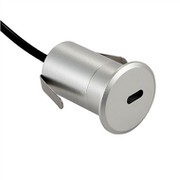
Waterproof LED underground light
Mar 25, 2022
LED inground lights are widely used in parks, lawns, squares, courtyards, flower beds, pedestrian street decoration. However, in practical application, LED buried lamps have various problems. The biggest problem is waterproofing.
It is believed that LED underground lights do not need to be waterproof IP68, because they are not subject to long-term underwater environment and water pressure like LED underwater lights. But in fact, LED underground lights need to solve the waterproof problem. In practical applications, LED underground lights are installed on the ground or in the soil. In addition to dealing with rainy days or flooding, they also need to deal with thermal expansion and contraction.
To solve the waterproof problem of LED underground lights, we must start from several aspects.
1. Housing: Die-casting aluminum housing is a popular choice because the die-casting aluminum housing is waterproof. But because of the different casting methods, the outer shell is dense and dense (molecular density) is different. When the shell is sparse to a certain extent, a short-term flushing will not cause water molecules to immerse. However, when the lamp housing is buried in the soil for a long time under the action of cold and hot suction, water will slowly seep into the lamp housing. Therefore, we recommend that the thickness of the shell be more than 2.5mm, and it should be die-casted with a die-casting machine with sufficient tonnage. The ground lamp housing produced by GREEN ATR is made of Die casting Aluminum ADC#12 with a thickness of 3mm.
2. Glass: Tempered glass is the best choice, and the thickness should not be too thin. Avoid breaking into water due to the stress of thermal expansion and contraction and the impact of foreign objects. GREEN ART chooses tempered glass with a thickness of 8mm.
3.Heat dissipation and ventilation: LED underground lamps have high heat and require good heat dissipation and ventilation to avoid the temperature difference between the inside and outside of the lamp being too large, the occurrence of water vapor, and the sudden cooling and heat causing the lamp to break down. The direct or indirect contact area between the lamp housing and the LED should exceed 80%, and air respirator, heat sink, etc. can also be added.
4.Mounting Sleeve: The Mounting Sleeve should be as high and thick as possible, and enough water will be immersed into the lamp body.
5. Glue filling: The power supply below the lamp body is filled with glue to die, and the lamp body is also filled with thermally conductive silica gel. It is a three-layer waterproof step.


6. During the installation process: fix the Mounting Sleeve first, and then fix the lamp body and the embedded parts. The internal structure of the lamp body cannot be disassembled.